


HAPPENING AT UNIONSWA
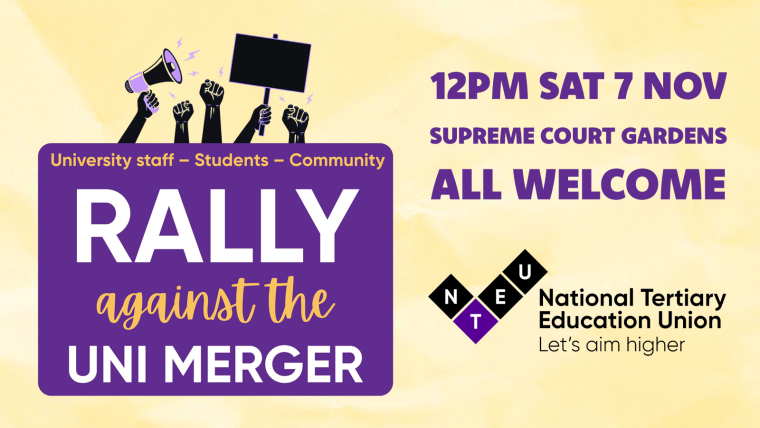
University staff, students and the community overwhelmingly oppose the State Government’s proposed merger of UWA, Curtin and Murdoch universities. We need REAL governance reform in the interests of students and staff – not more job cuts and corporatisation of the higher education sector.
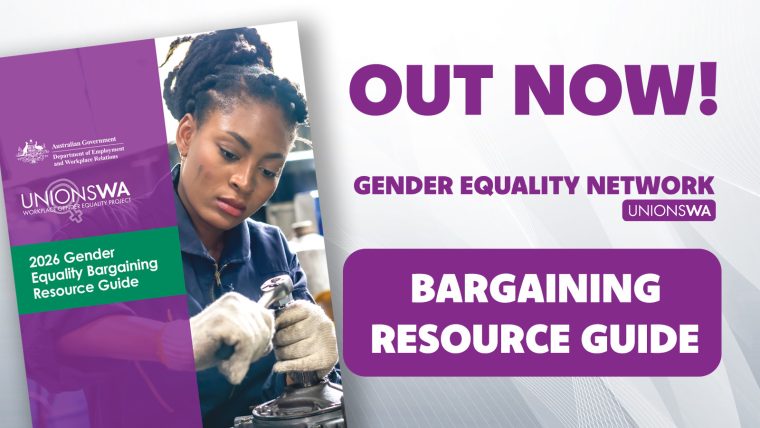
This resource guide supports union delegates and members to collectively bargain for gender equality. The model clauses explored in this resource include Reasonable Adjustments Menopause; Secure Jobs; Union Encouragement; Union Women’s Advocates; Discrimination Positive Duty; Family and Domestic Violence Leave; Pregnancy Breastfeeding Reasonable Adjustments; Reproductive Health Leave; Uniforms and PPE; and Universal Flexible Working Arrangements.

In this address to the Labour History Society, ETU WA State Secretary Adam Woodage shares the story of the campaign to re-establish meaningful union representation across the region — from the early conversations with workers and the investment in organisers and legal resources, to the challenges of enterprise bargaining and the lead-up to historic industrial action.

In the wake of the announcement by the Cook Labor Government of a 75% Renewable Energy Target for the South West Interconnected System, a coalition of West Australian unions, business and investors groups, and social and environmental organisations have launched a WA Clean Energy, Jobs & Industry Plan that lays out a pathway to realising the enormous economic potential of cleaner, greener, cheaper energy in Western Australia.

Western Australia continues to have one of the most gender-segregated workforces in Australia, despite growing demand for skilled workers in industries such as construction, energy and transport. A new report released by UnionsWA today reveals that while women are increasingly interested in entering these sectors, many continue to face significant barriers to recruitment, retention and career progression.

The No Respect, No Service project provides workshops and resources to repond to the high rates of sexual harassment and other forms of gendered violence experienced by young women and migrant women working in the hospitality, retail, and community sectors.

Do you know how often your super gets paid? Even if you don’t regularly check your balance there are rules around when your employer needs to pay you super, it’s called the Superannuation Guarantee (SG). Currently, employers only need to make SG contributions quarterly, but this will change from 1 July 2026.

It’s time all workers across Australia have access to ten days of paid leave to manage their reproductive
health. Paid leave will help address the gender pay gap, reduce reproductive health stigmas, support workers’ health and wellbeing and create more inclusive workplaces.

Have you checked your Super lately?
Whatever your path, we’re with you. Find out more>>
